
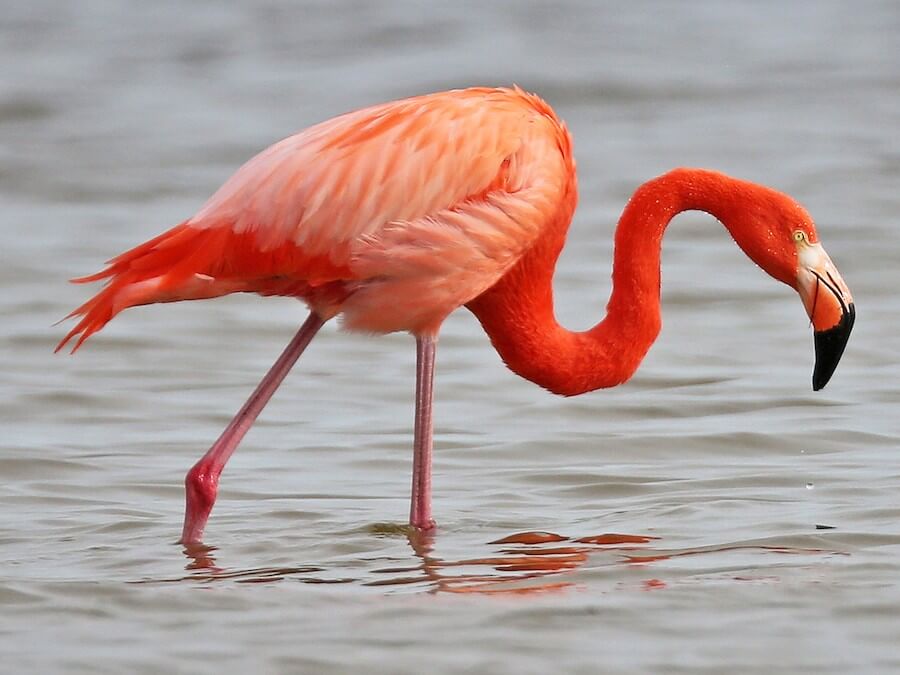
Questions about the origin of the American flamingo in Florida were put to rest in 2018 after a study confirmed that flamingos were present in Florida in large numbers in the 1800s before disappearing due to plume hunting. Researchers searched through museum collections and historical records and found a lot of evidence of flamingos in Florida. They concluded that they should be considered a native species, even though the current population of flamingos in Florida are birds that flew over from the Caribbean.
A different study asked, are manatees native to Florida? After reviewing archaeological evidence and historical accounts, researchers concluded that manatees may only infrequently have been present in Florida waters until the late 1700s/early 1800s, migrating from the Caribbean during periods of warm weather before becoming established in Florida.
Javelina, also known as the collared peccary, migrated north into the United States 250 years ago, but are considered native and can now be found in Texas, New Mexico and Arizona (javelina may look similar, but are not closely related to pigs).
It wasn’t until the 1850s that the nine-banded armadillo was first spotted on the U.S. side of the Rio Grande River (crossings may have only been possible after the construction of bridges). Since then, armadillos have expanded across the southeastern United States, naturally and with human assistance. The nine-banded armadillo has been designated the state small mammal of Texas, but is considered an exotic species in Georgia, and a “naturalized” species in Florida.
The Cattle Egret is another perplexing example. Originally from Africa, Cattle Egrets first appeared in the United States in the 1940s, apparently after flying across the ocean, and quickly spread across the country. The birds can now be found in almost all 50 states. Despite being a fairly new arrival, the species is not denigrated as a nonnative.